EKY: A Tabaru Tribesman
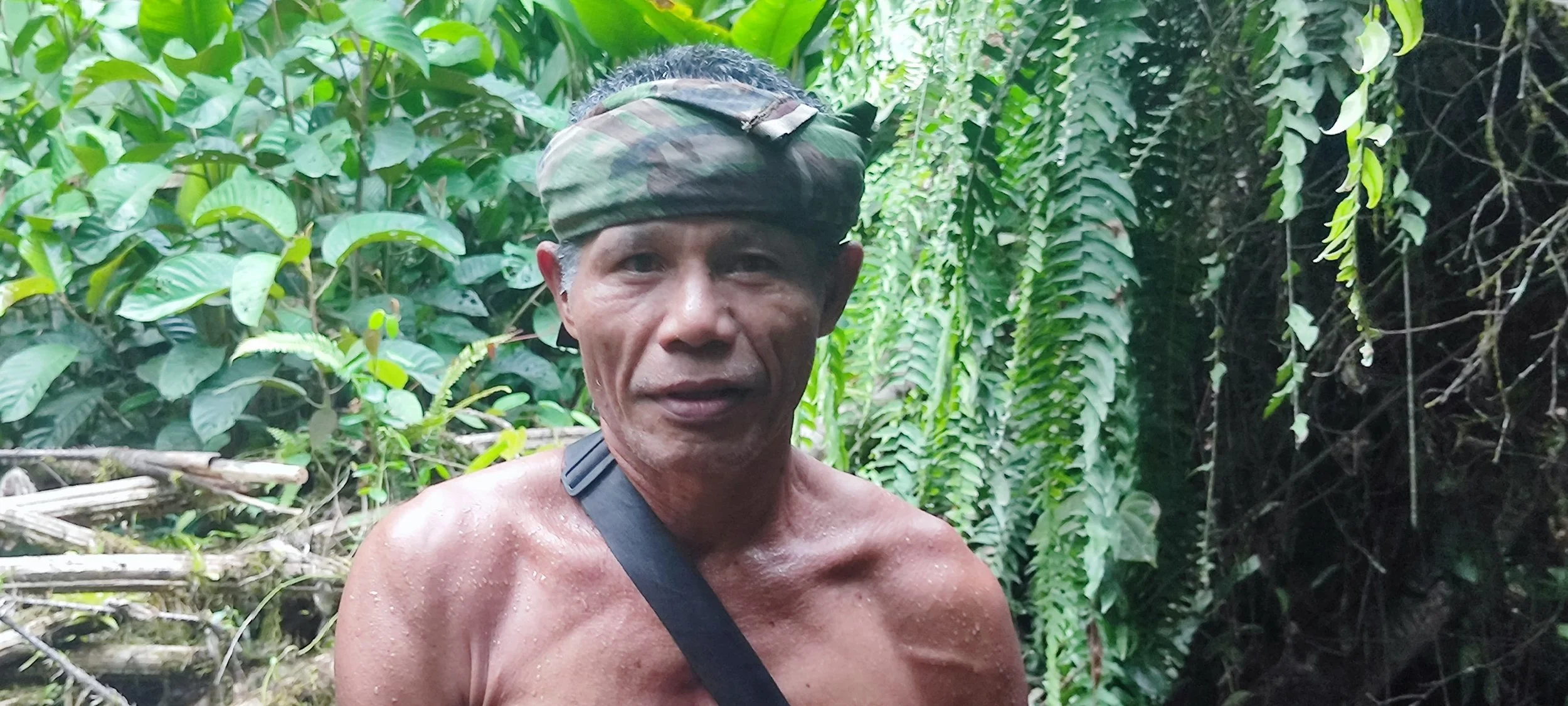
This week we sat down with Eky of the Tabaru Tribe. At just 21 years old, Eky has already spent a lifetime in the rainforest of Halmahera. Long before he ever guided international guests, he was walking jungle trails with his father, learning how to read the forest, find food, and survive nights beneath palm-leaf shelters. Today, Eky is taking his first steps toward becoming a fully operational jungle and wildlife guide — not by leaving his culture behind, but by building on it.
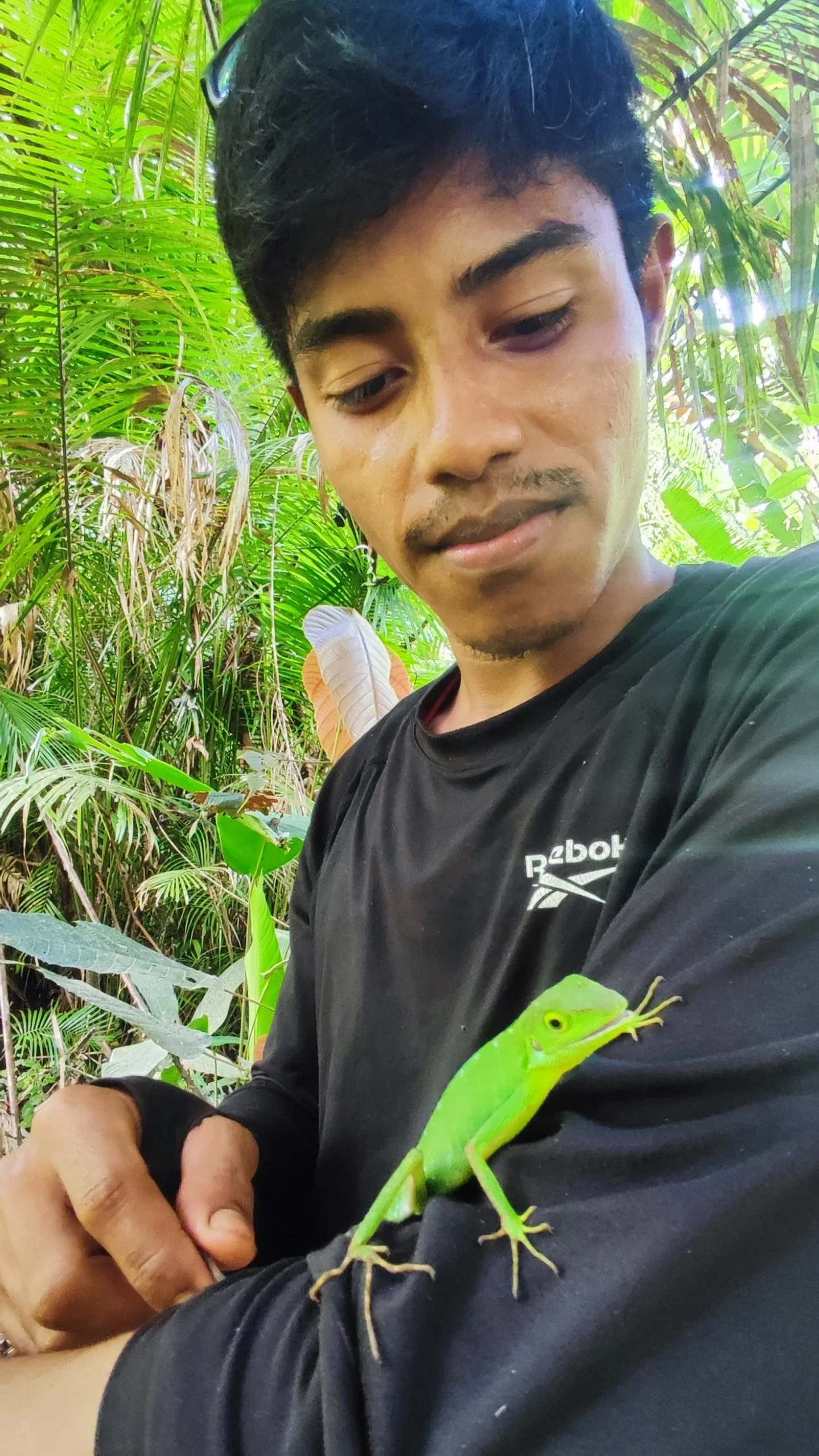
Eky is from the Tabaru tribe, custodians of a vast, intact rainforest landscape in North Halmahera. For generations, his people have lived from hunting, gardening, and small-scale agriculture. The forest is not a backdrop to life — it is life.
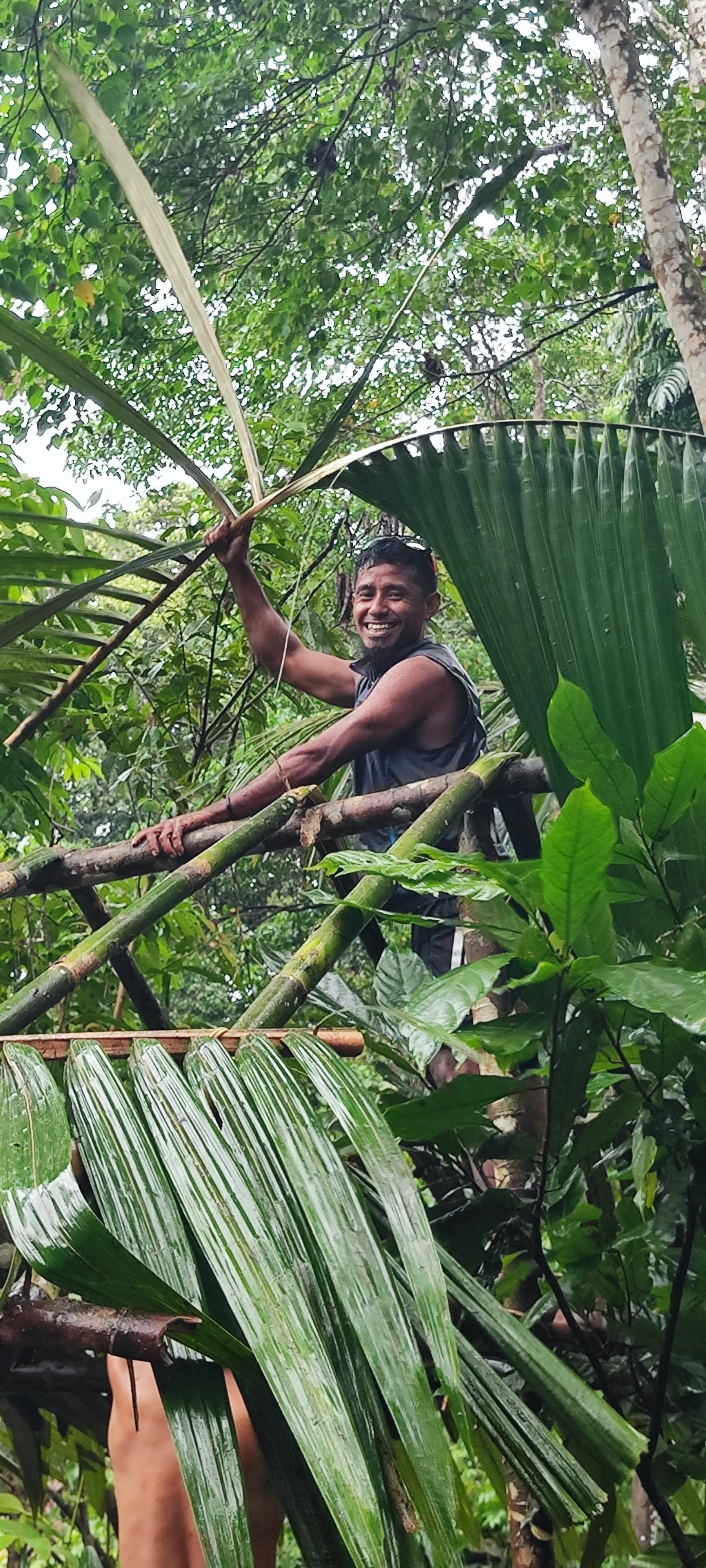
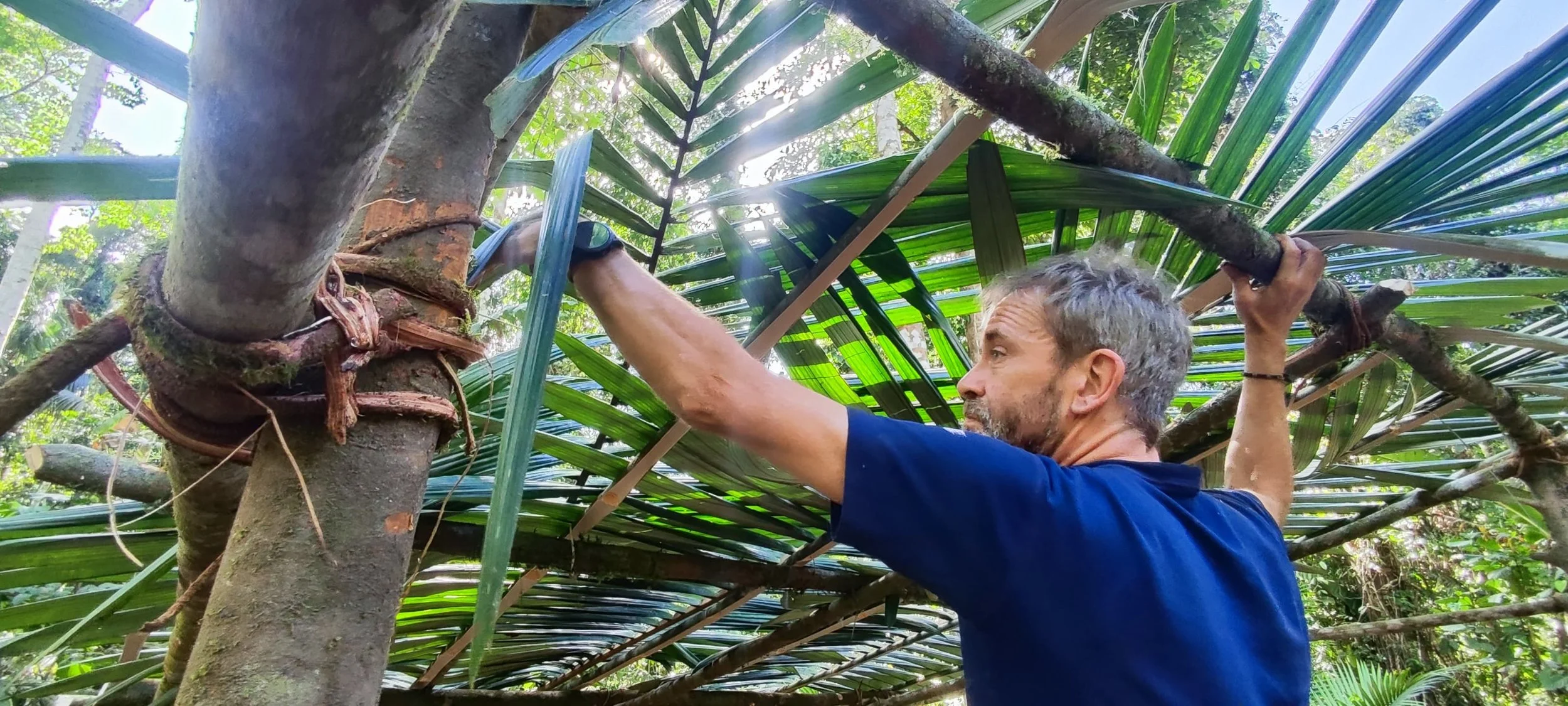
“Before I was old enough for school, I often went into the rainforest with my father,” Eky recalls. “He taught me how to find the nesting mounds of megapodes, how to search for their eggs, and how to hunt animals using simple traps. At night, we slept in small shelters we built ourselves, with roofs made from palm leaves.”
Those early experiences formed more than practical skills. They instilled respect — for elders, for safety, and for the forest itself. One lesson stood above all others: never enter the jungle alone. Knowledge, in Tabaru culture, is shared and passed down carefully.
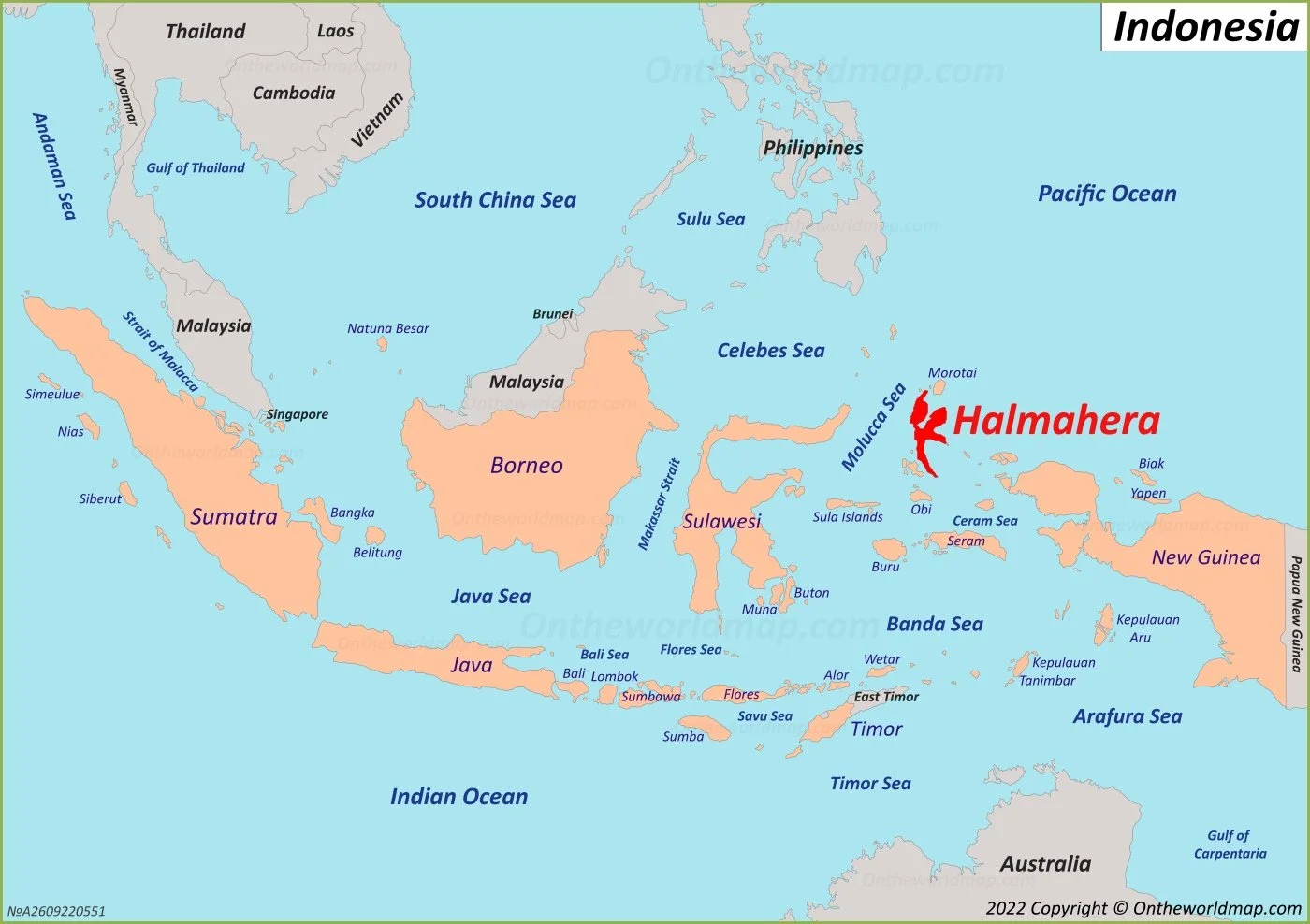
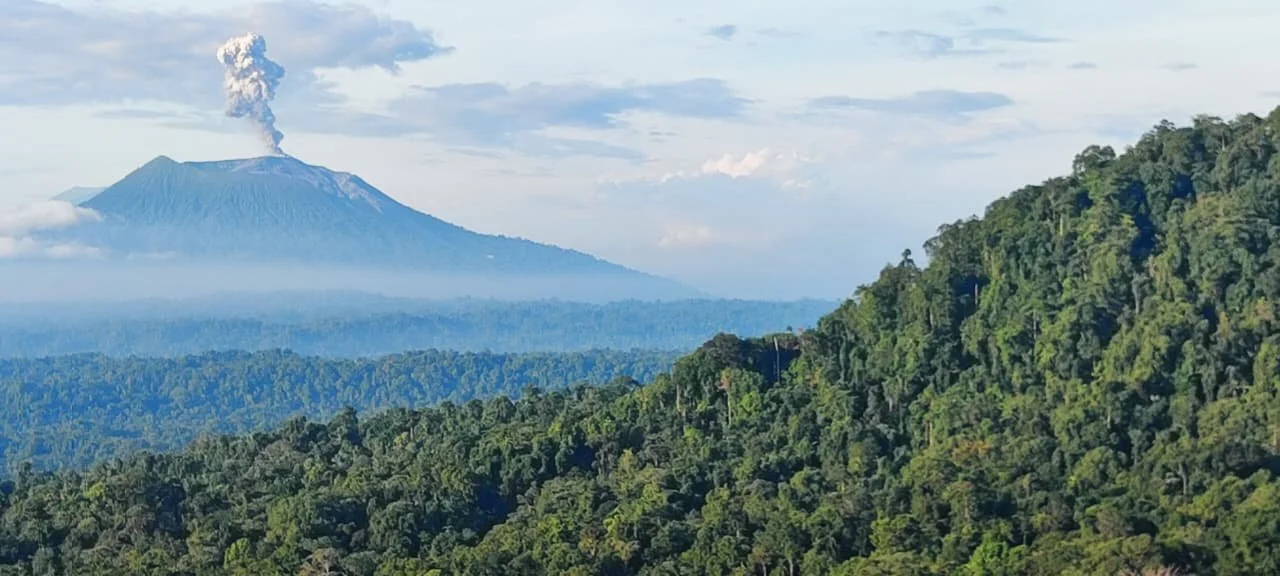
Where is Halmahera? Halmahera is the largest of the the Maluku Islands, Part of the North Maluku Province on Indonesia.
A Forest That Must Remain in Local Hands
For Eky and his community, protecting the rainforest is not an abstract idea. It is a responsibility.
“We are a strong community,” he says. “One of our goals is to make sure our rainforest is not sold to investors. It must stay in our hands for the next generations.” A true testament that guiding, conservation, and economic opportunity must grow together, led by local people.
Through expeditions, Eky’s family now plays an active role in hosting visitors. They own campsites used during treks, and family members work as porters and support staff. Guiding has become a new income source, but also a cultural exchange.
“We earn income for our family and our community,” Eky explains. “And we also learn a lot about the cultures of the tourists who visit us.”
At first, introducing Tabaru culture to international guests was intimidating. “I was nervous in the beginning,” he admits. “But now I really enjoy sharing our culture. Guests are very interested, and they truly appreciate learning how we live.”
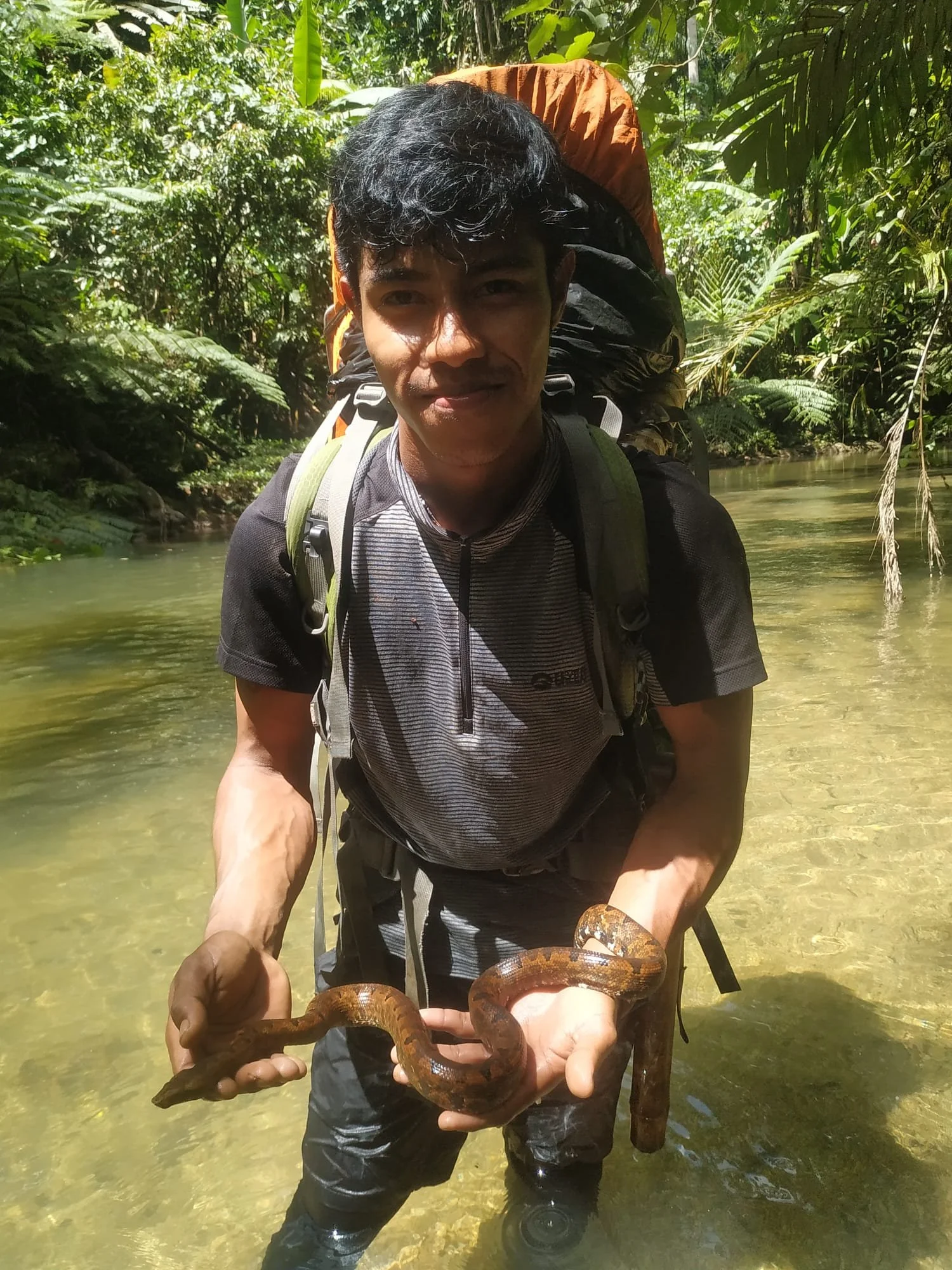
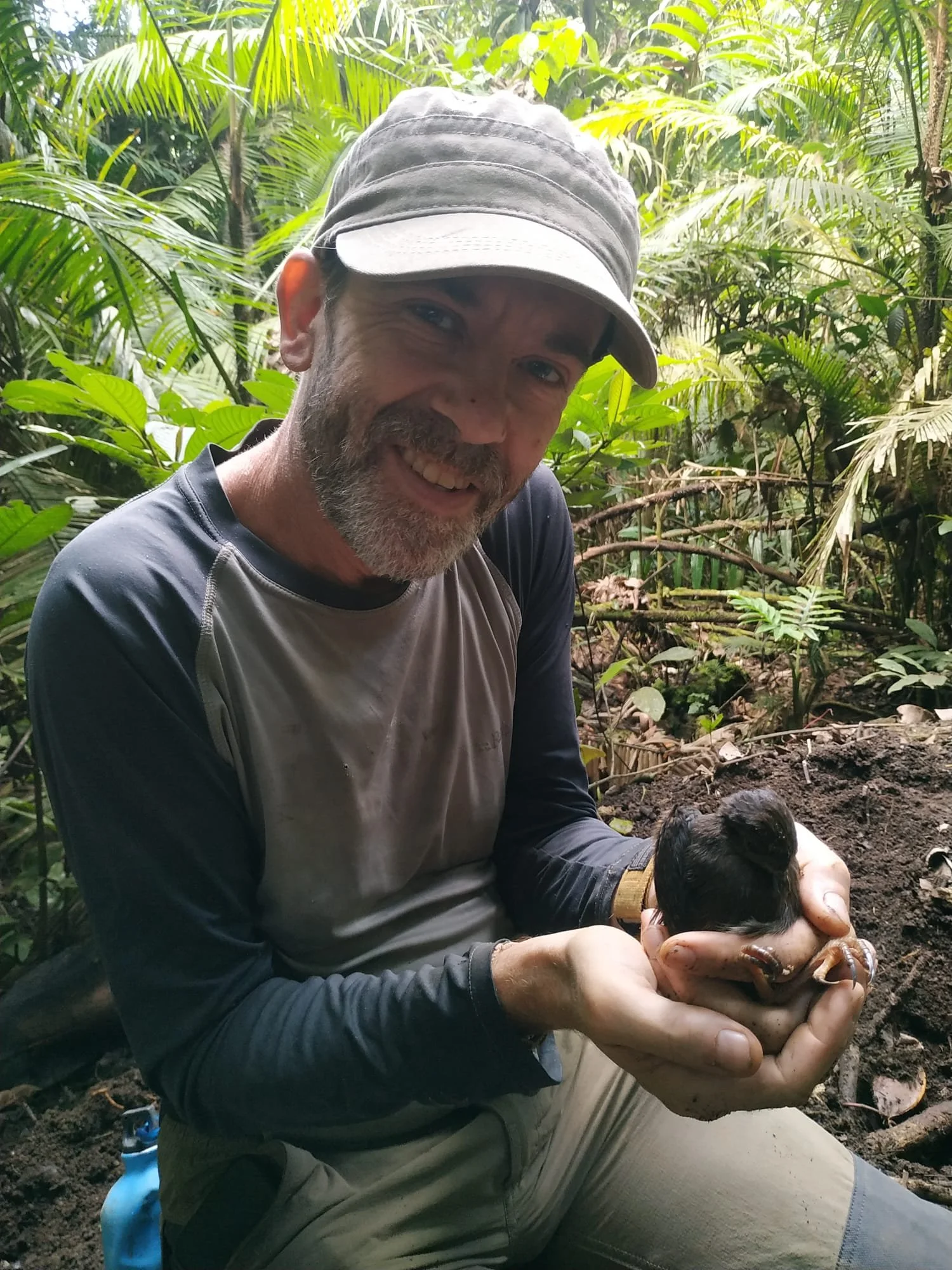
Image: Eky showing off his herpetology skills, posing with a snake to show to guests while on expedition.
Learning to Guide, Step by Step
Eky’s professional journey began at the most basic level — carrying heavy loads between camps, helping set up shelters, and supporting the team quietly in the background. Over time, his role expanded.
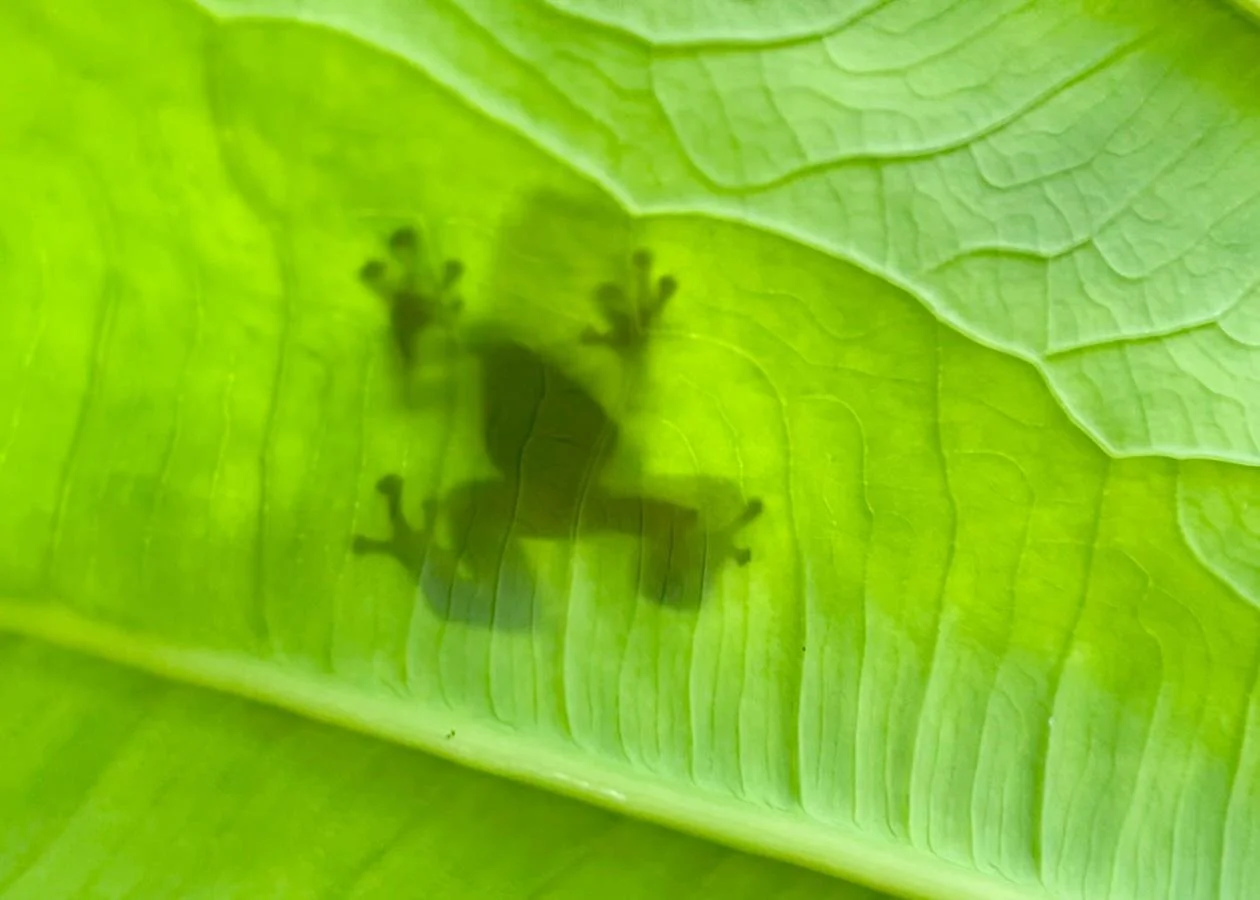
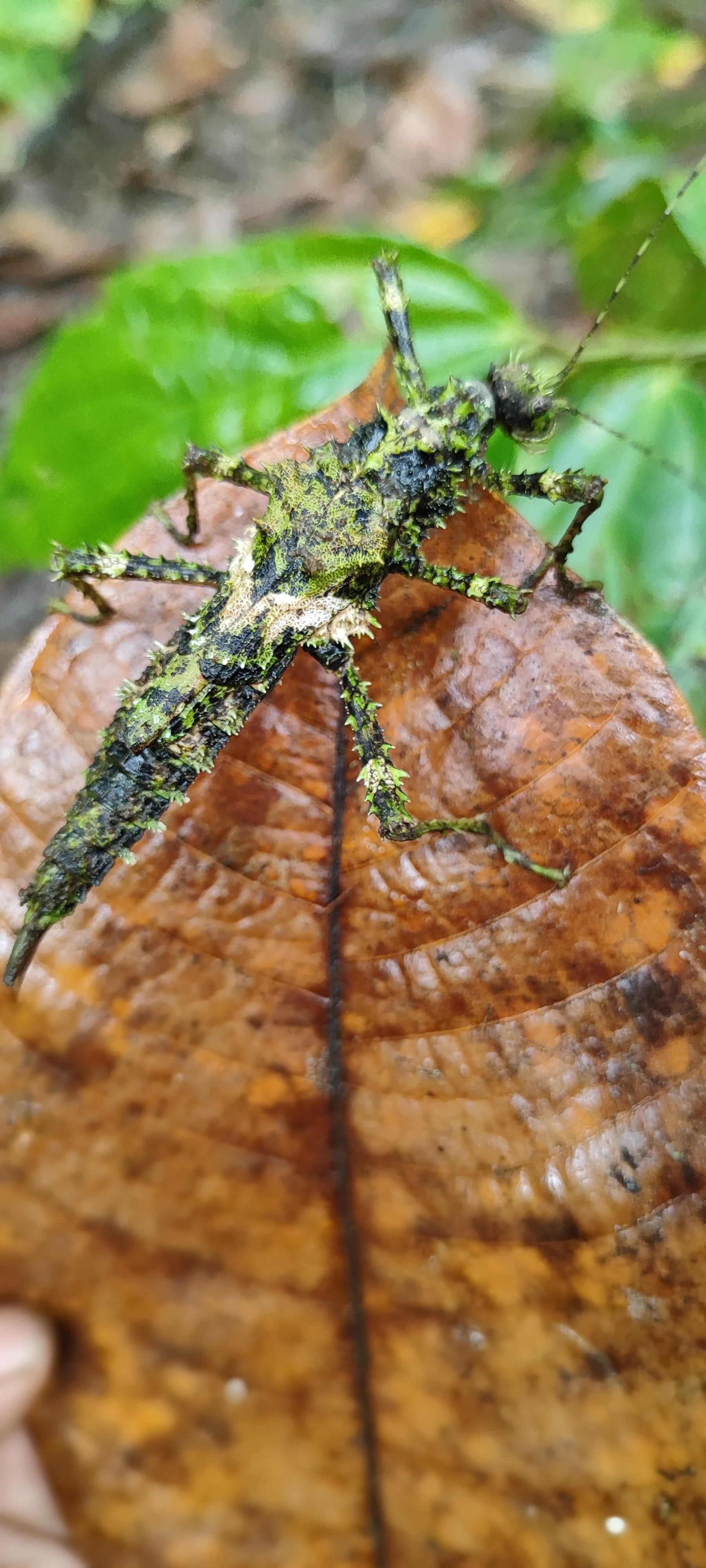
As a wildlife guide, he now walks directly with guests through his forest, locating birds, reptiles, insects, and mammals that many people have only ever seen in books.
“After every excursion, the guests thank me,” he says. “That makes me proud.”
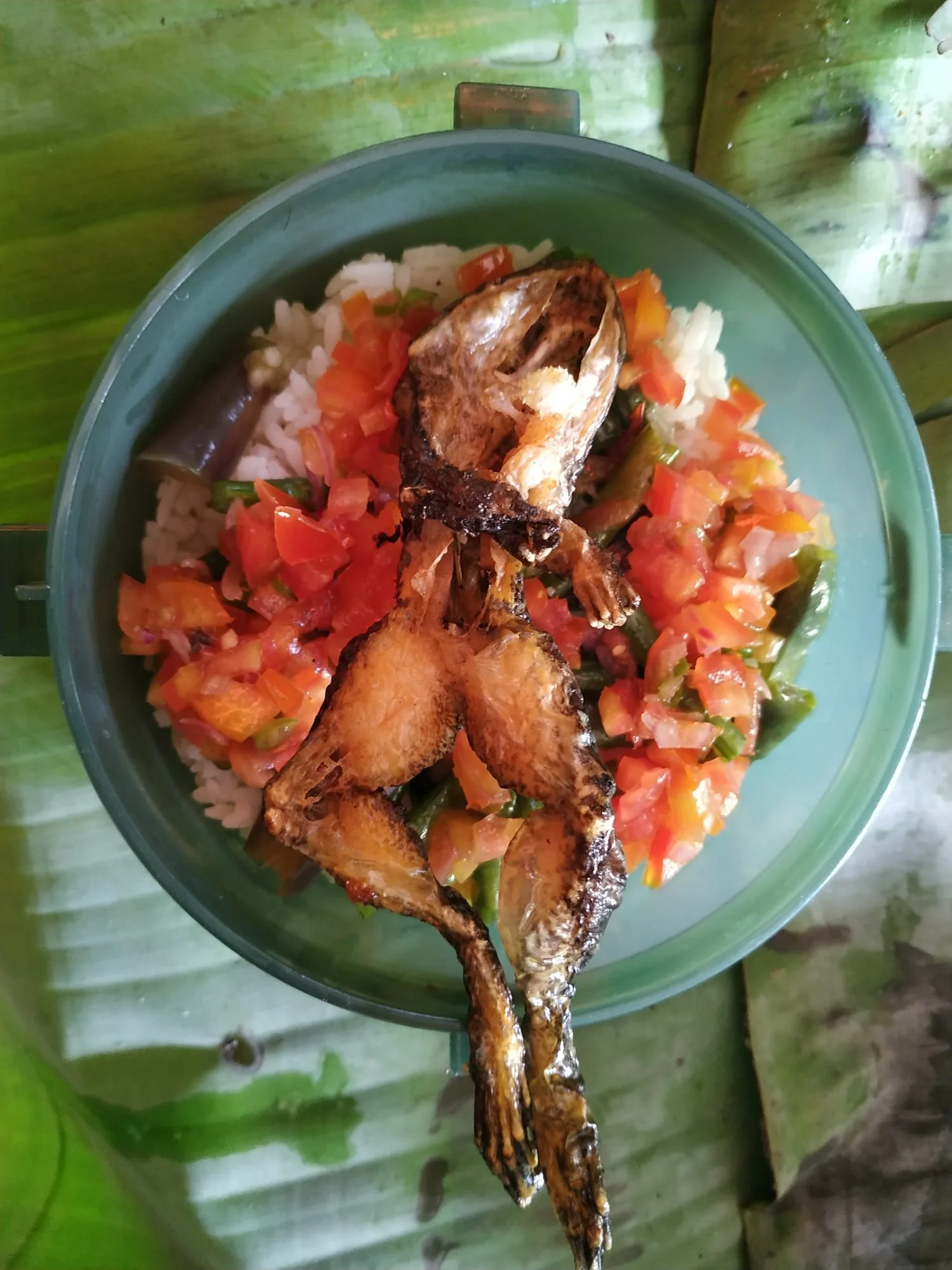
He has also begun helping prepare meals in camp, cooking over open fires in a wok. These moments often turn into shared experiences, with guests joining in to peel vegetables or learn jungle cooking techniques — small, human moments that build trust and connection.
Guests are often most surprised by how Eky moves through the forest.
“They are amazed at how quickly and quietly I move,” he says, “and especially that I always find the way back.”
Mentorship in the Field
A key part of Eky’s development has been his mentorship under expedition leader and association director Mikel Yaki, whom he first met through his father.
At 19, Eky joined Mikel’s team on a full west-to-east crossing of Halmahera — a demanding expedition that tested endurance, discipline, and teamwork.
“Mikel speaks good Indonesian, he is very patient, and he explains how to work with international guests,” Eky says. “He values discipline and honest, open communication. I feel that he has become part of our Tabaru family.”
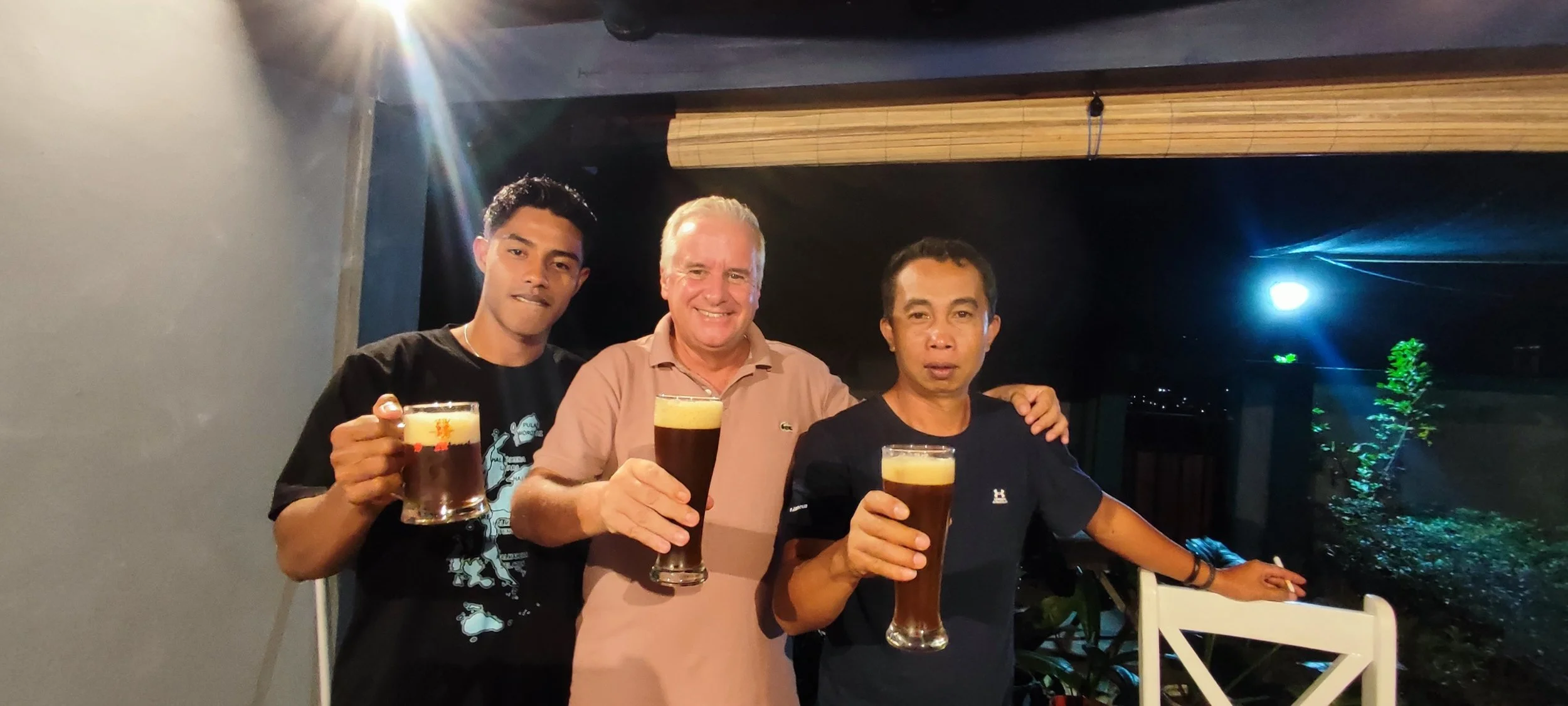
Image: Eky (left), IAJG Director Mikel Yaki (center) and IAJG certified guide Lister Pusung (right) enjoying a post expedition beverage.
“In school, we memorized many things,” Eky explains. “Here, every action is explained. Why we do something. Why safety comes first. That helps me understand much faster, and it gives me confidence.”
Under Mikel’s guidance, Eky has learned to stay calm under pressure, assess situations before acting, avoid unnecessary risk, and prioritize health and safety — skills that define professional guiding anywhere in the world.
Moments That Define a Guide
One expedition remains especially clear in Eky’s memory, not because of rare wildlife or perfect conditions, but because everything became difficult at once.
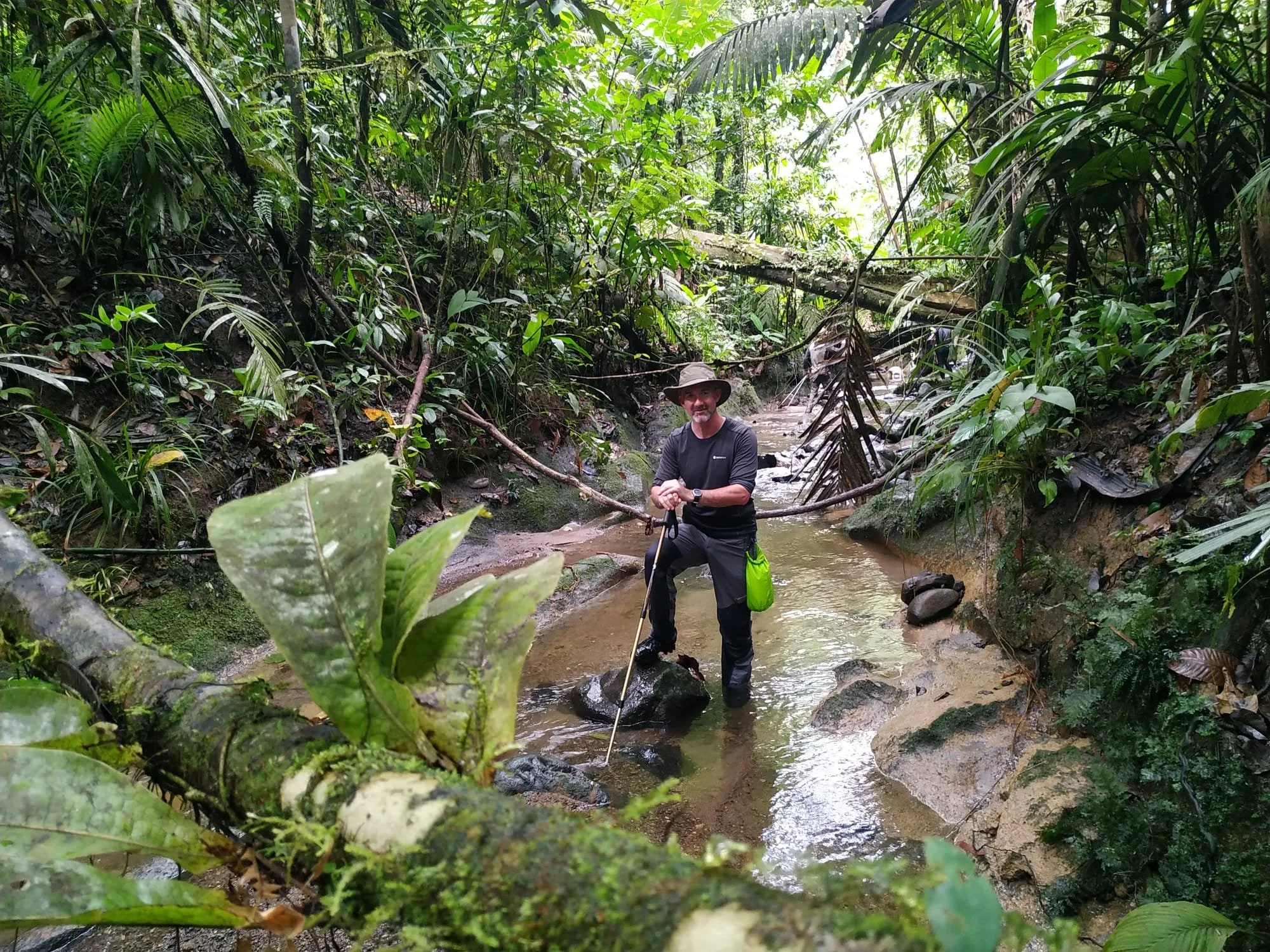
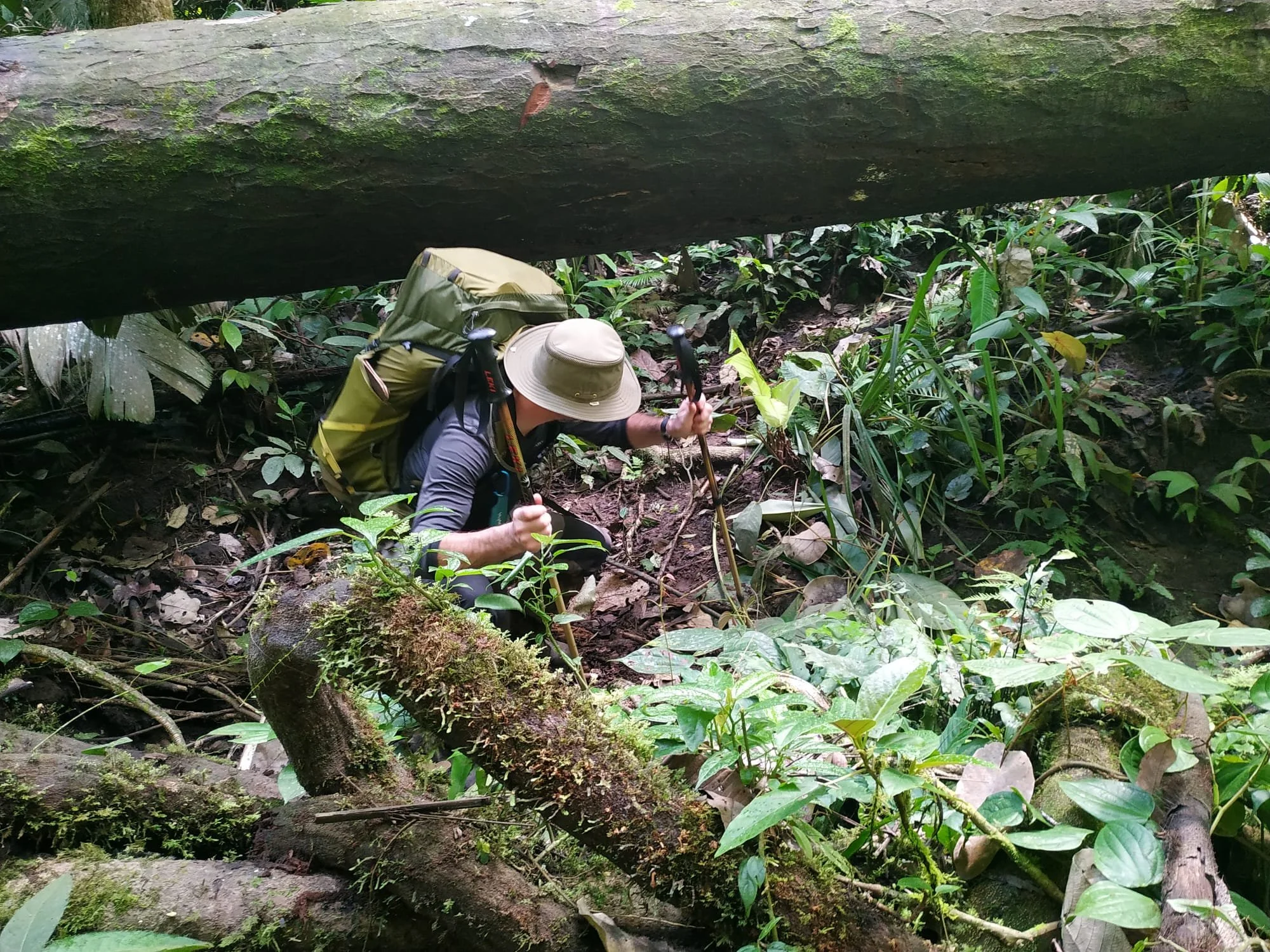
Heavy rain had fallen throughout the day, turning narrow jungle streams into fast-moving rivers. In several places, the team was forced to wade through water that reached up to their waists, carefully testing each step before moving forward. Progress was slow. The forest floor was saturated, and finding a safe, flat place to establish camp became increasingly challenging.
By the time a suitable location was finally identified, everyone was exhausted. Clothes were soaked through. Equipment was wet. The rain did not stop.
Still, the work had to be done.
Shelter was built, firewood was collected despite the conditions, and a fire was brought to life. A warm meal followed — simple, but deeply appreciated.
“When I saw the exhausted faces of the guests,” Eky recalls, “and their happiness when they received a warm meal despite the conditions, I felt very proud.”
For Eky, that moment marked a shift in how he understood guiding. It was no longer about moving through the forest or finding animals. It was about maintaining calm, making good decisions under pressure, and taking responsibility for the well-being of others — even when conditions were uncomfortable and morale was low.
These are the moments that shape a guide. Not the highlights, but the quiet, demanding situations where leadership, patience, and care matter most.
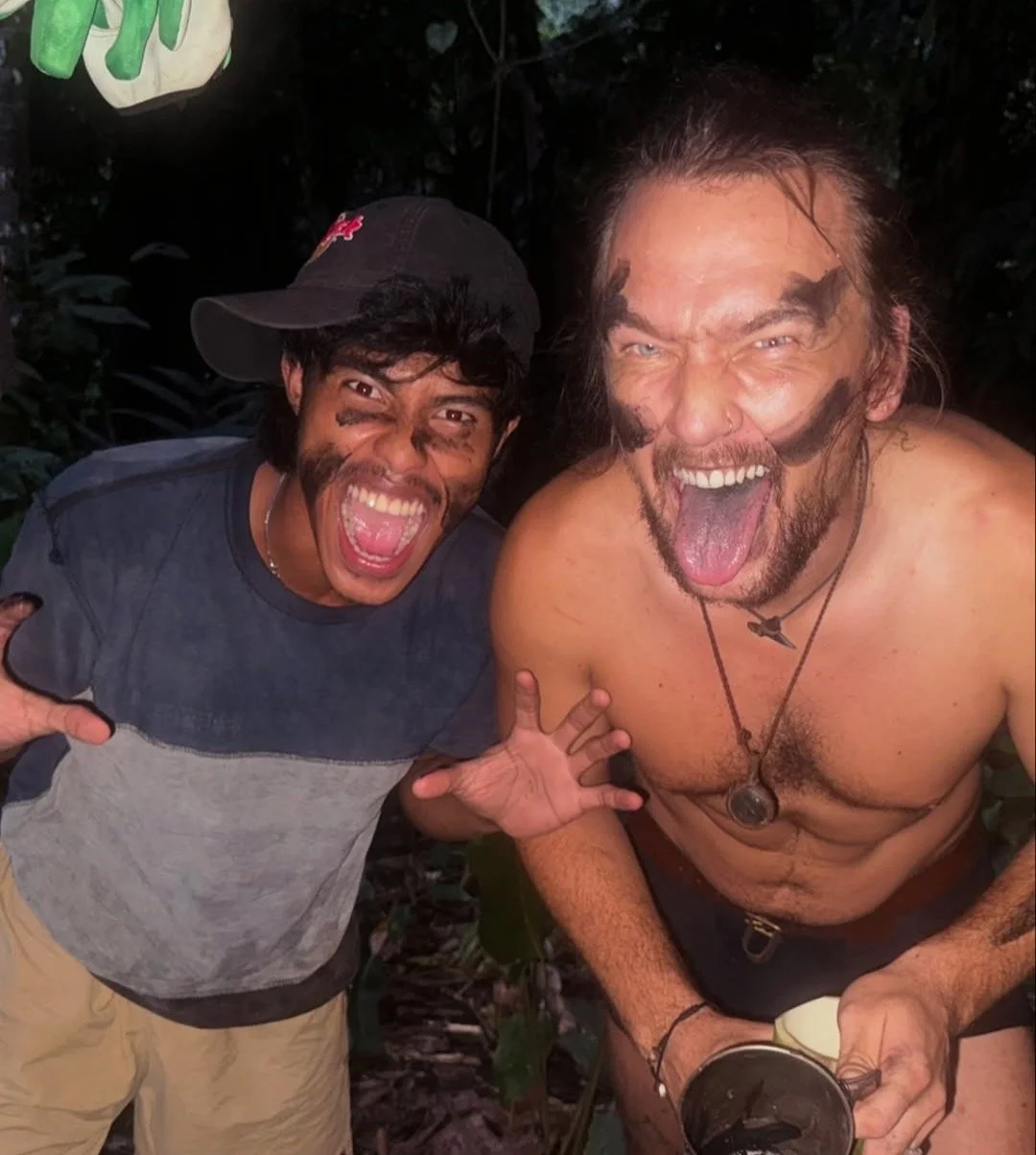
Image: Eky (left) on expedition posing with a tourist on Halmahera Island.
Looking Forward
Eky is clear about his path. He wants to become a jungle and wildlife guide — fully trained, fully capable.
“For me, it would be a great honor,” he says. “On Halmahera, most guides work short cultural tours, volcano climbs, or birdwatching. The path I want to follow is not easy, but I want to try.” Real, deep jungle immersion.
He hopes that other young people in his community will see what is possible.
“They see that I am happy,” he says. “They see that I have changed since working in tourism.”
For now, his focus remains on learning — improving his English by chatting with former guests, watching English-language films, and planning to take formal language courses. He is also excited for the upcoming expedition season, where he will once again join treks through his homeland.
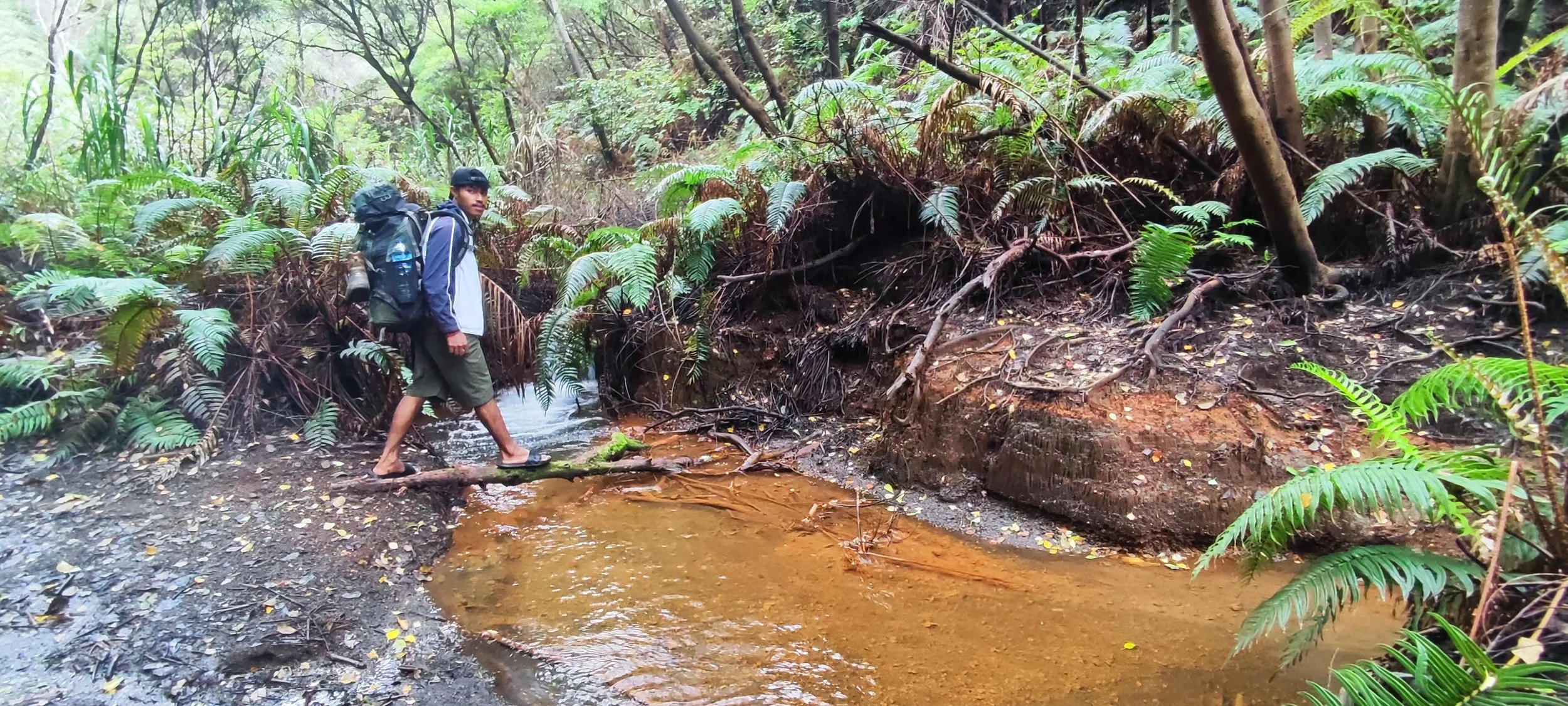
Image: Coming a long way in just a few short years from carrying heavy loads as a porter, to now being a key player on every expedition.
Why It Matters
Eky’s story is not just about one young guide. It represents a wider shift — one where local knowledge, professional standards, conservation, and economic opportunity grow together.
For guides in North Indonesia, his journey shows that working hard under mentorship to qualify to an international standard like with IAJG is not about losing identity, but strengthening it. For guests considering meeting Eky in Wild Halmahera, it offers something rare: the chance to walk the forest with someone who has lived it since childhood, and who is growing into his role with humility, discipline, and pride.
As Eky puts it himself: “Living in harmony with the environment, using its resources respectfully, and valuing biodiversity — this is what matters.”
And in Halmahera, that philosophy is not theory. It is lived, every day, step by step, through the jungle.